
Topshop to storm back on UK high street in 2026: Three John Lewis Midlands sites revealed in full list

Topshop will return to UK high streets in 2026, adding its collection to 32 John Lewis stores including three in Midlands.
Topshop is set to make a major comeback to the UK high street in 2026, five years after shuttering its stores.
Fans of Topshop can shop the legacy fashion brand in 32 John Lewis stores - which includes three Midlands’ sites - from February 2026.
Topman, the menswear brand will also be sold at six John Lewis sites.
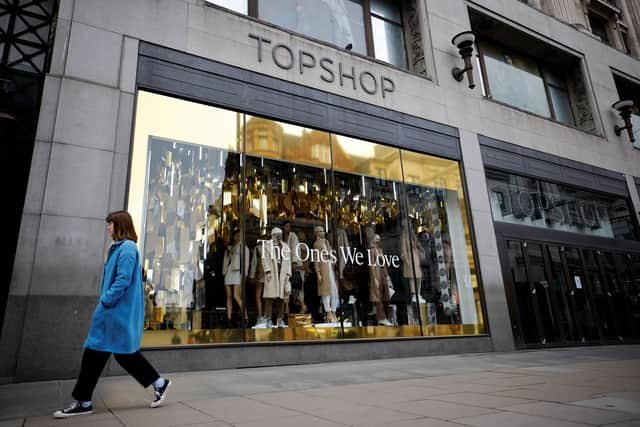

Midlands sites where Topshop is set to return: Leicester, Nottingham and Solihull
The Topshop fashion chain was one of the biggest in the 2000s.
It vanished from the high street after Sir Philip Green’s retail empire collapsed.
ASOS, the British online fast-fashion and cosmetic retailer bought the Topshop name.
It sold its majority stake a year ago to Anders Holc Povlsen, a Danish retail tycoon who has a Forbes real-time net worth of $13.4B.
As reported by BBC, the new Topshop spring collection will feature 120 pieces put together by John Lewis.
The brand is set to take up a "prime" position in stores, according to Peter Ruis, managing director at John Lewis.
It is hoped the move will tempt new customers to John Lewis.
Michelle Wilson, managing director of Topshop and Topman said: "Customers absolutely want to see us back in stores and we want to bring that nationwide.”
Retail consultant Graham Soult said the John Lewis - Topshop collaboration was “a canny move” which could pave the way for more iconic names to return to the high street.
Here is full list of John Lewis stores that will sell Topshop items
- Glasgow, Scotland
- Edinburgh, Scotland
- Newcastle
- Leeds
- Liverpool
- Trafford, Manchester
- Cheadle, Manchester
- Cardiff, Wales
- Nottingham, Nottinghamshire
- Leicester, Leicestershire
- Solihull, West Midlands
- Cheltenham, Gloucestershire
- Norwich, Norfolk
- Cambridge, Cambridgeshire
- Welwyn, Hertfordshire
- Milton Keynes, Buckinghamshire
- Chelmsford, Essex
- Cribbs Causeway, Bristol
- Exeter, Devon
- Oxford, Oxfordshire
- High Wycombe, Buckinghamshire
- Reading, Berkshire
- Bluewater Kent
- Horsham, West Sussex
- Southampton, Hampshire
- Brent Cross, London
- Stratford, London
- Canary Wharf, London
- Oxford Street, London
- Peter Jones, London
- White City, London
- Kingston, London
The teaming up of the two giants may appear unconventional given their vastly different customer bases, however it could bring huge benefit to both brands.
The High Street is a different space today than five years ago; it may therefore be prudent to appreciate the trajectory of High Street fashion and also the traditional shopper.
Bethan Alexander is an associate professor in retail, marketing and management at London College of Fashion.
She said: “The traditional shopper is now older [and] more conscious about their consumption.
"You can't just resurrect the same fast fashion heritage … the customer is different today."