
Endo the Battle: Why does it take so long to get an endometriosis diagnosis? What needs to change

The average time it takes to get an endometriosis diagnosis has actually gone up 🚨
Despite being named one of the top 20 most painful conditions in the UK, endometriosis takes an average of eight years and 10 months to be diagnosed.
The delays for getting an endometriosis diagnosis have actually gone up by 10 months, with patients in Northern Ireland facing waits of nine years and five months and patients in Wales a staggering average delay of nine years and 11 months.
Waiting lists could potentially be to blame, with three-quarters of a million patients waiting on gynaecology waiting lists in the UK. It leaves many patients turning to private care, or seeking care further afield, to access treatment or a diagnosis - and the long waits often means symptoms are left to progress.
‘If I hadn't gone privately, I probably wouldn't have a bowel’
Gabz Pearson, co-founder of the Menstrual Health Project, knows this only too well, having previously paid privately for surgery. She told us: “I've suffered it first hand, unfortunately.
“I've had five surgeries in total now, I had my first three on the NHS and then my first private one was because the wait list for my consultant’s priority list was three years and his regular list was about five years.
“When I went private, the surgery was just under £5,000. When I had my second private surgery last year it had doubled to almost £10,000. If I hadn't gone private, I probably wouldn't have a bowel or a left ovary anymore, because they were completely fused together and fused to my pelvis.”
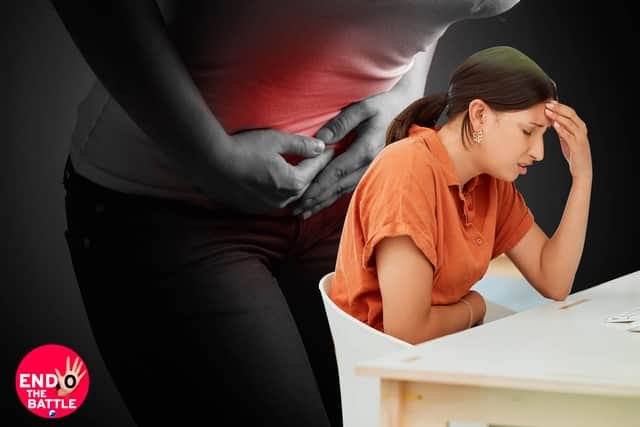

But misinformation also plays a role in diagnosis delay, Jodie Hughes, founder of Endo South Coast told us.
“I think the main misconception is that it's a period condition,” she said.
“Endometriosis isn't a period condition. It isn't a menstrual condition. It isn't a gynaecological condition. It's a full body systemic inflammatory condition that then affects the menstrual system and the gynaecological system.
“So if you don't have heavy painful periods, but you're still in pain all the time, endo isn't suspected and you're not going to get that referral to a gynaecologist.”
It takes on average eight years and 10 months to get a diagnosis for endometriosis in England and Scotland, nine years and five months in Northern Ireland and a staggering nine years and 11 months in Wales.
This Endometriosis Awareness Month, we have launched the Endo the Battle campaign, to amplify the voices of patients with the common condition.
And we want to hear from you. If you have endometriosis or have experienced symptoms, we’d love to hear your story. You can anonymously share your experience navigating endometriosis via our survey.
‘If you don’t know a disease exists, how do you know you’ve got it?’
When we asked campaigners and charities what change was needed to tackle this, they said education was key in changing the tide.
The Menstrual Health Project offers endometriosis toolkits to anyone who suspects they may have endo and are currently carrying out a survey on menstrual health education, whilst Endo South Coast emphasises education at “every single touch point”.
Jodie told us: “That’s the most important thing. In medical education, we know that there's no endometriosis-specific modules.
“We need Continuing Professional Development (CPD) accreditation once GPs are in their positions, and not just the people that want to do it, but everybody. Every GP needs education around it because somebody is going to come to them and they may be palmed off.”
Endometriosis is a systemic inflammatory condition where cells similar to the lining of the uterus are found elsewhere in the body, which can cause debilitating symptoms.
It takes on average eight years and 10 months for an endometriosis diagnosis in England and Scotland, nine years 11 months in Wales and nine years and five months in Northern Ireland.
Symptoms can include:
- pelvic pain
- painful periods
- painful bowel movements
- painful urination
- pain during or after sex
- infertility
- chronic fatigue
More education around endometriosis is also being pushed by those in power.
We spoke with Sir Alec Shelbrooke, MP for Wetherby and Easingwold, who has spoken about endometriosis in Parliament.
He led a debate in May 2024 that highlighted the importance of including endometriosis education in the new relationships, sex and health education (RSHE) curriculum for schools.
Sir Alec said: “If you don’t know a disease exists, how do you know you’ve got it?
“If you take that as your starting point and realise that so many women don’t know what endometriosis is, and most men haven’t got a clue about what endometriosis is, and yet 10% of women suffer with endometriosis, that becomes your first problem of discerning a diagnosis.
“We need to educate people, we need them to know. And when’s the best time to do that? When you’re at school.”
The Endo the Battle campaign is being spearheaded by health writer Sarah McCann - read her endometriosis story.
If you have been affected by the content of this article or suspect you may have endometriosis you can find out more about the signs and symptoms at the Menstrual Health Project.