
Derbyshire auction: Rare Tudor posy ring found in field dates back to reign of Henry VIII
A rare Tudor gold posy ring, believed to date back to the reign of Henry VIII, is expected to fetch thousands at auction. Discovered in Bedfordshire, this 16th-century love token features an intriguing inscription and exquisite design.
A gold Tudor posy ring believed to date back to the reign of Henry VIII is set to fetch thousands at auction after being unearthed in a field.
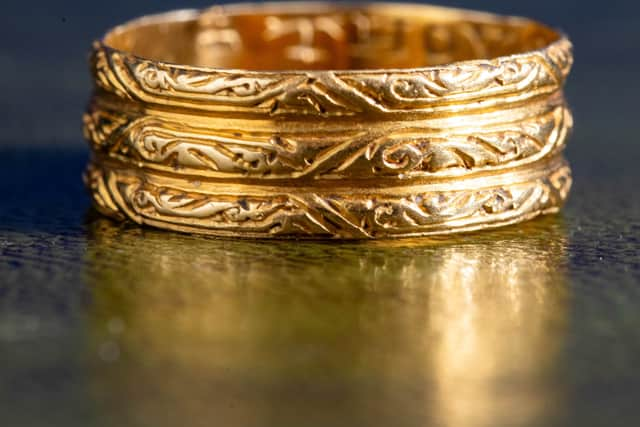

The "remarkable" piece of post-medieval jewellery, which is around 485 years old, was discovered on land in Bedfordshire back in May 2023.
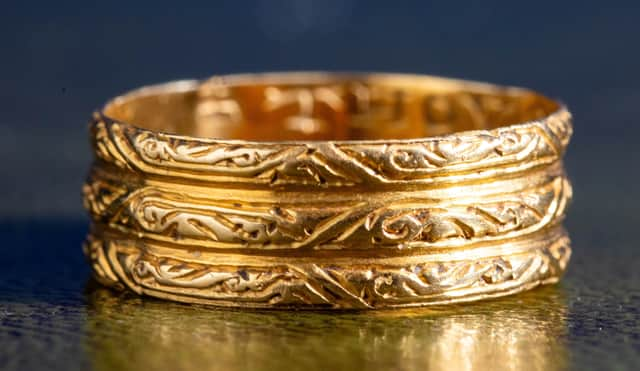
The circa 1530-1560 posy ring, a popular 16th century love token, bears the cryptic and poetic Inscription: "Thou now ill / not always”.
It is now set to fetch between £4,000 and £6,000 when it goes under the hammer at Hansons Auctioneers in Etwall, Derbyshire, in June.
Charles Hanson, owner of Hansons Auctioneers, said: “This is a rare and exciting find – a post-medieval gold posy ring which we believe dates to around the mid-16th century.
"These rings were often exchanged as tokens of love or betrothal, and this one is especially intriguing due to its unusual inscription.”
The phrase is engraved inside the band in clear Roman capitals and Charles believes it can be interpreted as thou "now sick, not always thus”.
It is thought it was perhaps intended to comfort a loved one during hardship or illness.
Charles added: “It may reference a change of heart, or a vow of enduring love through difficult times.
"These mottoes often reflected deeply personal, emotional messages between lovers.”
The ring features a triple-banded design decorated with scrolling foliage and petal-like motifs, which is said to be a "highly unusual style".
The crisp engraving and the style of lettering, which pre-dates the adoption of italic script in the late 16th century, dates the piece to between 1530 and 1560.
Charles added: “To think this ring was crafted nearly a century before Oliver Cromwell is remarkable.
"It was likely lost in the mid-16th century and remained preserved beneath the earth for nearly 500 years.
"Its survival in such immaculate condition – untouched by plough or damage – makes it all the more extraordinary.”
Posy rings, deriving from the word poésie (French for poetry), were popular from the 15th to the 17th centuries.
Their inscriptions were often drawn from poetry, scripture, or romantic verse.
A Hansons spokesperson added: "They are now highly collectable and cherished for their personal stories and historical context."