
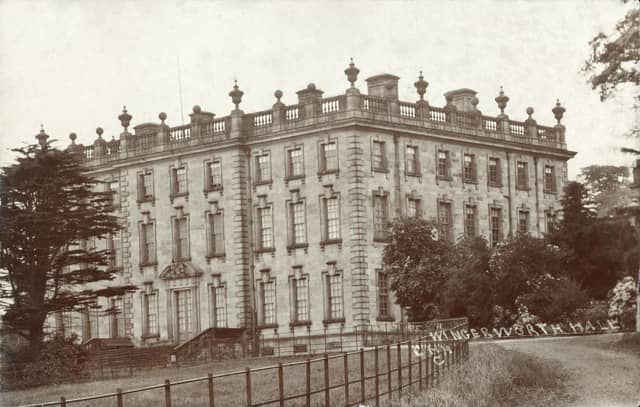

Photos include town centres scenes and impressive historic buildings – some of which no longer exist.
Pictures include Ripley Market Place in 1906, showing the Town Hall and the old Post Office.
Historic buildings such as Bolsover Castle, Eyam Hall and Lea Hurst, the country manor on the estate of William Edward Nightingale, the father of nurse and medical reformer Florence Nightingale.
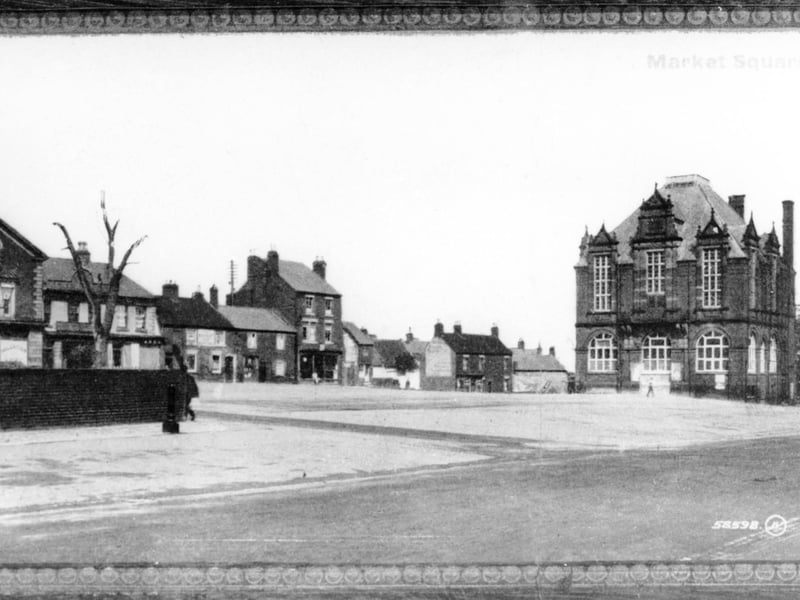
21. Ripley
Ripley Market Place showing the elm tree, 1906. The large building on the right in this picture is the Town Hall and the third building from the left is the old Post Office. (Photo by NEMPR Picture the Past/Heritage Images/Getty Images) Photo: Heritage Images
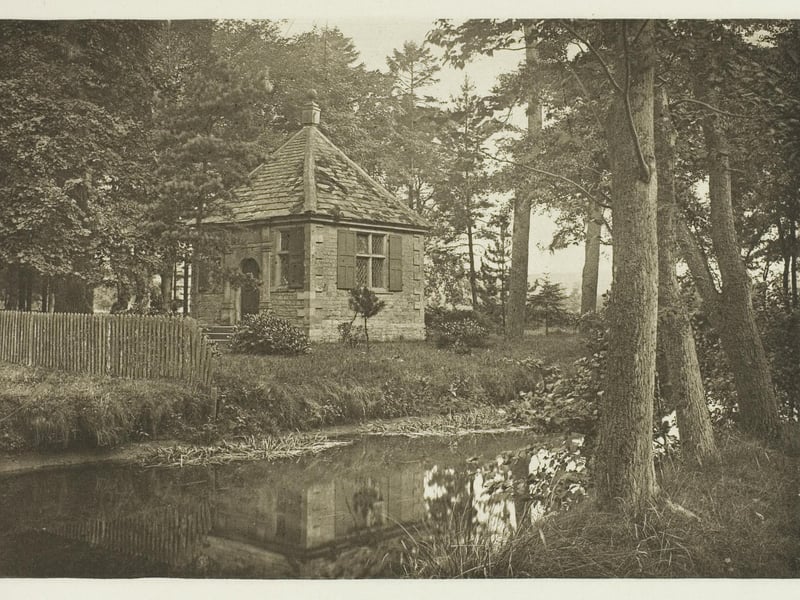
22. Beresford Dale
Walton and Cotton's Fishing House, Beresford Dale, 1880s. A work made of photogravure, plate xlviii from the album 'the compleat angler or the contemplative man's recreation, volume ii' (1888); edition 109/250. Artist Peter Henry Emerson. (Photo by Heritage Art/Heritage Images via Getty Images) Photo: Heritage Images
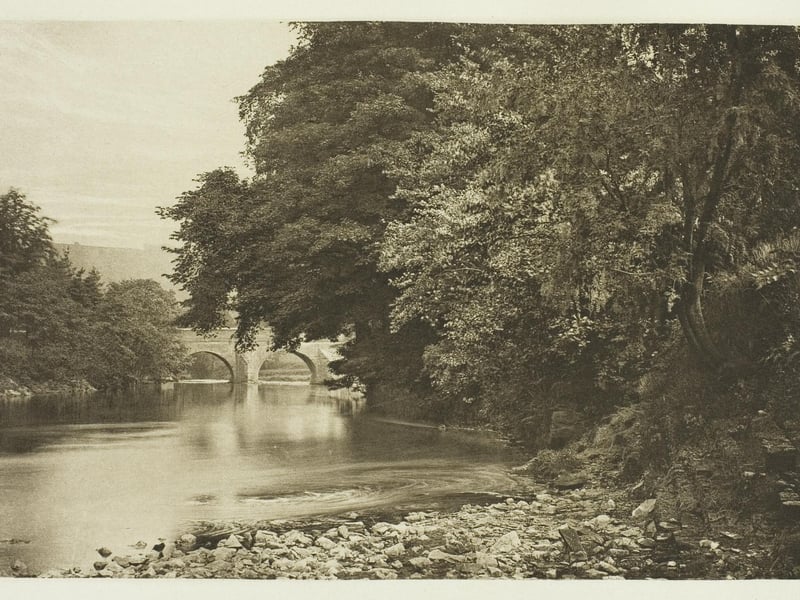
23. Rowsley Bridge
Rowsley Bridge, on the Derwent, 1880s. A work made of photogravure, plate xxxvi from the album 'the compleat angler or the contemplative man's recreation, volume ii' (1888); edition 109/250. Artist Peter Henry Emerson. (Photo by Heritage Art/Heritage Images via Getty Images) Photo: Heritage Images
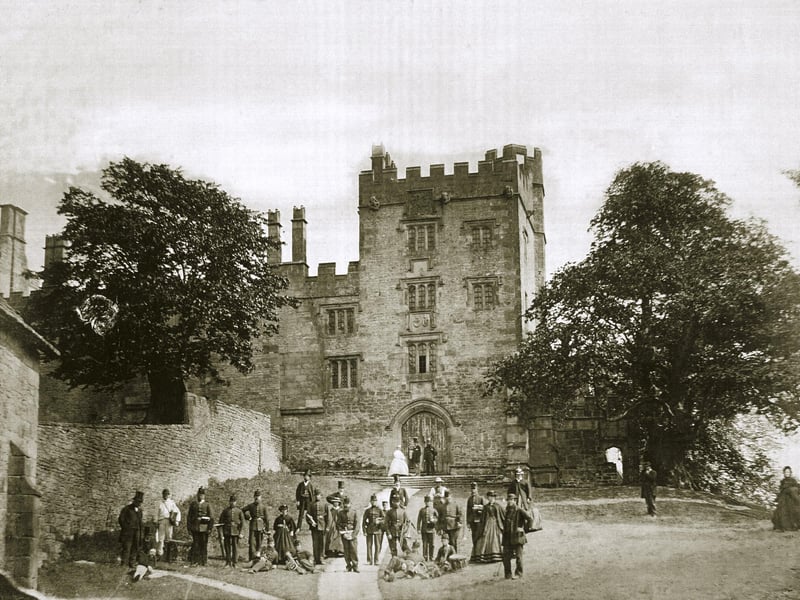
24. Haddon Hall
Visit of 200 Belgian volunteers to Haddon Hall, Derbyshire, 1867. A legion of about 2000 volunteers was formed in Belgium to help Emperor Maximilian of Habsburg in his attempt to become Emperor of Mexico. His wife, Empress Charlotte, was a daughter of Leopold I, King of the Belgians. The legion was mainly composed of soldiers with Belgian nationality, but also 79 Germans, 64 French and 27 Luxembourgers. The training of the Legion was in the region of Oudenaarde (East-Flanders). At that time the legion was composed of 2111 persons, included 15 women. 4 ships voyaged in 1864-1865 to transport about 1600 men of the Legion from St Nazaire (France) to Vera Cruz (Mexico). Only 754 survived. 176 Belgians remained in Mexico after their unit was disbanded on 6th December 1866) The rest, presumably, enjoyed rest and recuperation in places such as Derbyshire, and a troop is seen here at Haddon Hall. Photo: Heritage Images