
Fight so save decaying Derbyshire manor where Mary, Queen of Scots was held prisoner

Pictures reveal the drastic decay of Wingfield Manor in Derbyshire, a former prison for Mary, Queen of Scots, as nature reclaims the historic site.
Dramatic pictures show the decaying ruins of an iconic British manor house - which once held Mary, Queen of Scots prisoner.
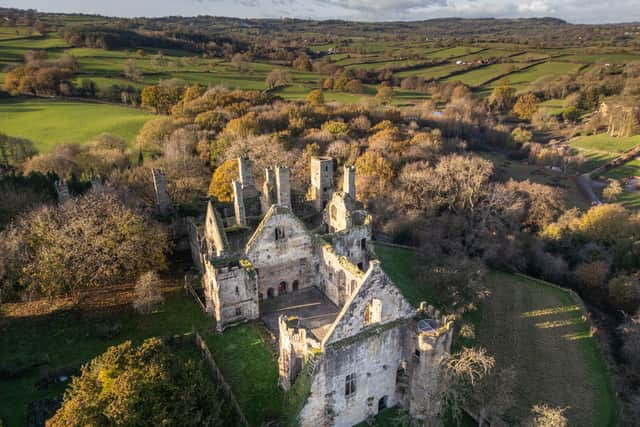

Drone images have captured the fragile state of Wingfield Manor, in Derbyshire, a Grade I listed building, which previously stood as an opulent home for the super wealthy.
Records suggest the grand house was built in during the 1440s for the wealthy Ralph, Lord Cromwell, Treasurer of England - though it is believed to have been occupied since the 12th century.
Lord Cromwell who was born in Lambley, Nottinghamshire, fought in the Hundred Years' War and also held a number of government roles.
These included being a member of the council that advised Henry VI before he came of age.
Upon his death in 1456 the property was passed onto the 2nd Earl of Shrewsbury, John Talbot, who later passed during the War of the Roses in 1460.
It was the Earl who imprisoned Mary, Queen of Scots there between 1569, 1584, and 1585.
The manor stayed with his family for nearly next 200 years until it was besieged by Royalists in 1642 and then Parliamentarians in 1644.
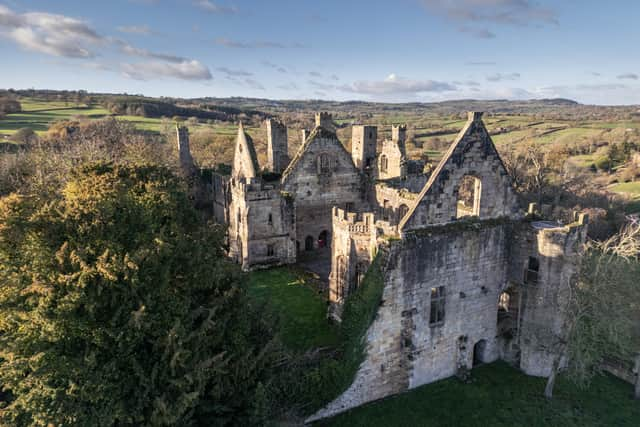
As a result the once glorious house which overlooks the beautiful rolling hills of the Amber Valley countryside has slowly fallen into ruins.
The property is also believed to have held the first flushing toilet which was built in 1596.
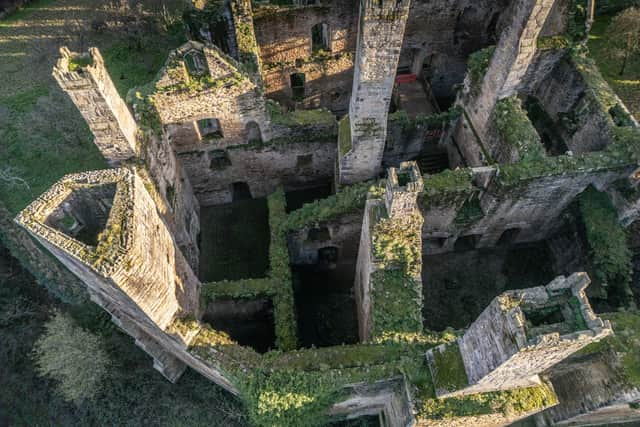
It's crumbling, fallen stone walls from its now mostly open roofs can be seen lying around the site as a reminder of just how bad its condition is.
Now, members of the public can no longer visit the magnificent ruins after it was closed off due to health and safety fears over its deteriorating condition.
Members of the Derbyshire Historic Buildings Trust (DHBT) are now fighting to save the building with a petition for its revival reaching 3,000 signatures in July earlier this year.
In the 1950s the then Ministry of Works of the government took the management side of the manor off the hands of the land owner as it was believed they were not maintaining or repairing it.
Responsibility was then given to National Heritage Collection charity, English Heritage.
The original government body that managed the national collection was split in 2015, with the property management function becoming English Heritage.
And the government's advisory role on heritage passing to the new executive non-departmental public body called Historic England.
English Heritage have previously said there are "major challenges and costs involved with securing its future".