
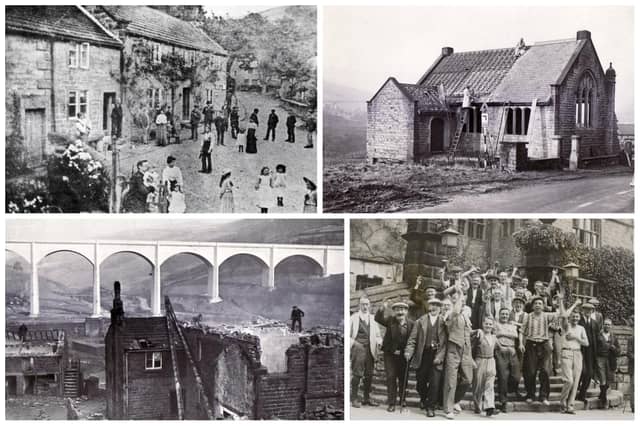


The villages of Derwent and Ashopton vanished beneath the waters of Ladybower Reservoir in 1943, their churches, pubs, farms, schools, and homes submerged to make way for the reservoir in Derbyshire’s scenic Upper Derwent Valley.
Many visitors may not realise that these were once thriving communities, with charming streets lined with stone cottages.
Derwent was home to a small but close-knit community, complete with a school. Its most iconic building was the Church of St John & St James, built in 1867, with a tower added in 1873. When the village was demolished in 1943, the church’s spire remained standing as a memorial, eerily rising from the water. However, due to safety concerns—particularly as people swam out to climb it—the spire was later dynamited.
Another significant landmark was Derwent Hall, a grand manor house built in 1672. Surrounded by magnificent gardens, ornamental trees, and a large fishpond, it was a striking feature of the village.
Ashopton, a larger village situated along the main road between Sheffield and Glossop, was known for its bustling coaching inn, The Ashopton Inn, which served travellers passing through the area.
Last summer’s intense heatwaves and drought, brought on by historically low rainfall, caused water levels in Ladybower Reservoir to drop dramatically.
As a result, the remnants of these long-lost villages resurfaced, offering visitors a rare and haunting glimpse into the past.
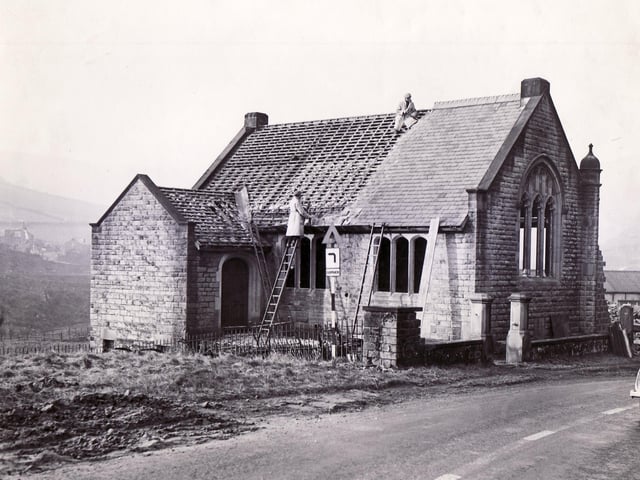
5. Wesleyan Methodist Church
Ashopton Village Wesleyan Methodist Church pictured in January 1943 Photo: Julia Armstrong
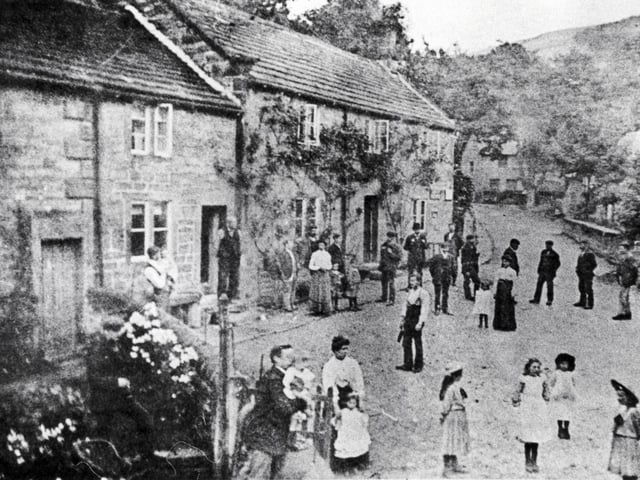
6. Busy day in Ashopton
A busy day in Ashopton in 1912. Residents of the now submerged Ashopton village turned out for this photograph, many of them in their Sunday best Photo: dt
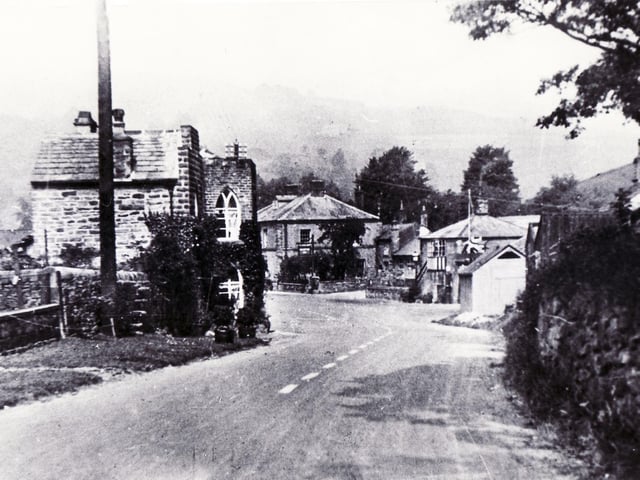
7. More than 100 people lived in Ashopton.
More than 100 people lived in Ashopton. Photo: DT
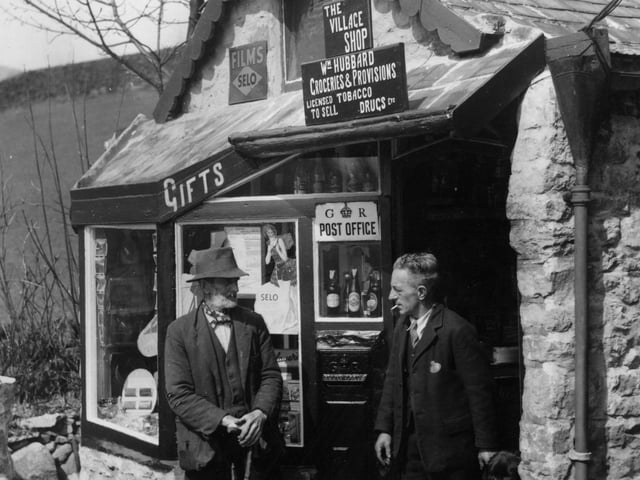
8. Postmaster
Postmaster William Hubbard, who built Ashopton post office single handedly from local stone, discussing its impending doom with a villager on 20 April 1936. The village was demolished in 1943 before being submerged as part of the the Derwent Valley reservoir scheme. The reservoir was opened as Ladybower Reservoir in 1945. Photo: Fox Photos