
First brass bands in the Midlands: Derby's 19th century military origins uncovered
A Cambridge historian challenges the belief that brass bands began with industrial communities
Britain’s brass bands weren't all originally from the north - with many formed beyond northern cities, by soldiers returning from the Napoleonic Wars, says an acclaimed historian.
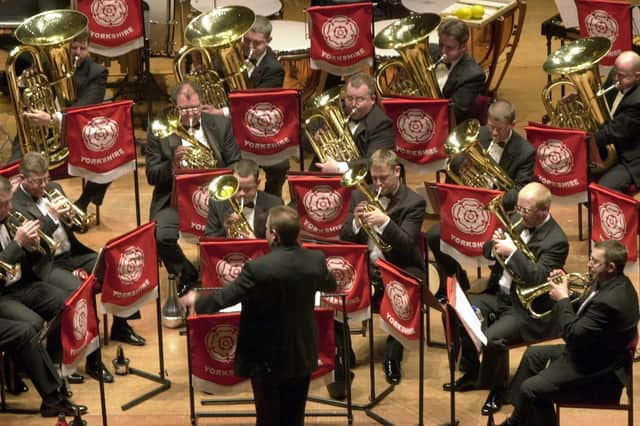

The study by a Cambridge University historian debunks the idea that the iconic musical ensembles were a civilian and exclusively northern creation.
Dr Eamonn O'Keeffe says the Colyton Brass Band was the first named civilian band that played God Save the King in a Devonshire village in November 1828 as part of birthday festivities for a baronet's son.
He found later examples in Chester and Sunderland (both 1829), Derby and Sidmouth (1831), and Poole (1832).
It is widely believed that brass bands originated with coal miners and other industrial communities in northern England and Wales between the 1830s and the 1850s.
But Dr O'Keeffe has found "compelling" evidence to show that Britain’s first brass bands were formed by military musicians as early as the 1810s.
The study published in The Historical Journal argues regimental bands first experimented with all-brass line-ups in the aftermath of the Napoleonic Wars.
While war-time bands included woodwind instruments including bassoons and clarinets, Dr O’Keeffe points out that the 15th Regiment of Foot had already organised a bugles-only band by 1818 and that other regiments had established all-brass bands by 1830.
For example, the Life Guards performed on valved trumpets gifted by the Russian Czar.
Local defence units also mustered brass bands, including a volunteer rifle corps in Paisley (1819) and yeomanry troops in Devon (1827) and Somerset (1829).
Dr O’Keeffe also shows that veterans of the Napoleonic wars formed many of Britain’s earliest non-military brass bands from the 1820s onwards.
The bands often emerged beyond the northern English and Welsh industrial areas with which they later became synonymous.
Dr O’Keeffe, who is the National Army Museum Junior Research Fellow at Queens' College, Cambridge, said: “These findings illustrate just how deeply brass bands are embedded in British history and culture.
“We already knew about their relationship with industrialisation.
"Now we know that brass bands emerged from Britain’s wars against Napoleon.”
Dr O’Keeffe discovered most about a band founded by James Sanderson, a Waterloo veteran, in Leamington Spa, Warwickshire.
Sanderson, a former trumpet-major, publicised his ‘military brass band’ in the Leamington Spa Courier in February 1829.
Surviving newspaper reports reveal that the band, equipped with keyed bugles, trumpets, French horns, and trombones, performed at several well-attended fetes and other events in the area.
Sanderson’s military pension describes him as a labourer born in Thrapston, Northamptonshire.
He joined the 23rd Light Dragoons, a cavalry regiment, in 1809, fought at the Battle of Waterloo in 1815 and went on to become the trumpet-major of the 13th Light Dragoons.
He left the army due to epileptic fits in the 1820s.
On June 29, 1829, the Leamington Spa Courier reported that ‘Sanderson's Warwick and Leamington Military Brass Band’ performed at a Waterloo anniversary parade in Warwick.
Dr O’Keeffe says that the Napoleonic Wars from 1793 to 1815 led to a "dramatic proliferation" of British military bands.
By 1814, more than 20,000 instrumentalists were serving in uniform, in the regular army and militia, as well as several part-time home defence units.
Dr O'Keeffe explained that most of those in full-time service received higher pay than regular soldiers, but were still subject to military discipline.
By studying press reports, memoirs and regimental records, Dr O’Keeffe reveals that once demobilised, men and boys who honed their instrumental skills in uniform embarked on a range of civilian musical careers, becoming instructors, wind performers, composers, and even opera singers.
Dr O’Keeffe says many performed in militia and volunteer bands that remained active long after demobilisation.
He said others instructed or participated in a growing range of amateur wind and all-brass bands, which often sported uniforms and "consciously emulated" their regimental equivalents.
Dr O’Keeffe said: “It is widely assumed that brass bands were a new musical species, distinct from their military counterparts.
"They are primarily seen as a product of industrialisation pioneered by a combination of working-class performers and middle-class sponsors.
“But all-brass bands first appeared in Britain and Ireland in a regimental guise.
"As well as producing a large cohort of band trainers, the military provided a familiar and attractive template for amateur musicians and audiences.
"This coincided with expanding commercial opportunities and a growing belief in the moralising power of music.”
Dr O’Keeffe says that the "quasi-martial" troupes enjoyed cross-class appeal, becoming fixtures of seaside resorts, pitheads, and political demonstrations in the decades after Waterloo, and were not confined to northern English industrial towns.
He said: “Soldiers returned from the Napoleonic wars amidst a severe economic recession and many suffered a great deal.
“But here we see musicians using the skills they developed in the military to survive and often thrive.”
Dr O'Keeffe, who is writing a book about British military music during the Napoleonic Wars. added: “Brass bands enabled aspiring musicians of all ages to develop new skills and allowed people to make music as a community, learning from each other.
"That was the case in the 19th Century and it’s still the case today.”